Related content:
🞩

Carbon Capture Technology and Textiles
The innovative company that deeply cultivates the transformation of waste gas into fabric collects and processes waste methane and carbon dioxide emitted into the air, and uses biotechnology and green chemistry processes to convert waste into low-carbon materials.
From emissions to polyester:
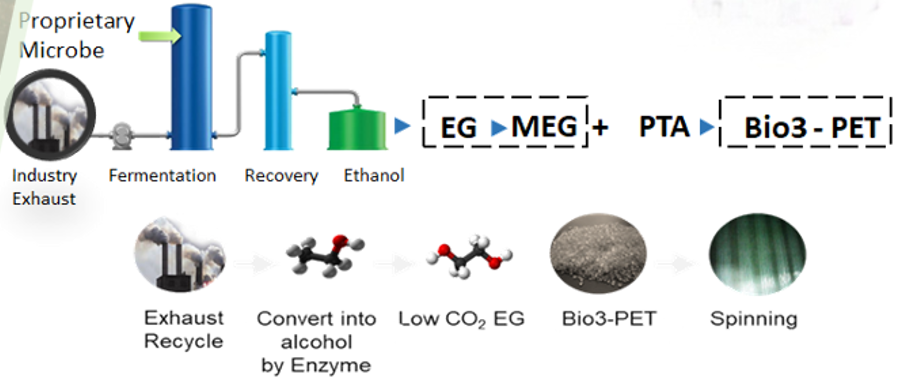
LanzaTech, located in Chicago, collects the polluted exhaust gas generated by the factory before it enters the atmosphere, which is used to cultivate bacteria. The ethanol released by bacteria forms ethylene glycol (MEG), which is one of the components of polyester and can be processed into polyester. American biotechnology company MangoMaterials uses methane to cultivate bacteria, which produces butyrate polyester. The French startup company Fairbrics uses carbon dioxide exhaust gas and water to produce polyester, and the related process simulates the growth process of plants, but the power source changes from photosynthesis to electricity.
From carbon dioxide to cellulose: San Francisco startup RubiLaboratories uses enzymes to process captured carbon into carbon neutral cellulose.
Resin and Plastic:
Carbon Upcycling NLT, a joint venture between CarbonUpcycling Technologies (CUT) and Newlight Technologies, processes greenhouse gases into carbon neutral polymers, resins, and materials made from tree based biochar. Newlight has received $45 million in fund investment to expand its operations
AirCarbon Plastic Project.
Plastic coating:
The catalytic chemical process of Econic Technologies, a British company, converts carbon dioxide to produce coatings and high elastic polyurethane. The company stated that this technology can be compatible with existing facilities in chemical plants through adjustments and renovations. The company has also recently received $4.2 million in funding to expand the application scale of this technology. German company
Covestro has launched Cardyon, a thermoplastic polyurethane based on carbon dioxide.

andLanzaTech 专有 CarbonSmart
technical cooperation
1. Polyester contains 30% bio based ethylene glycol produced from waste gas
2. Capture steel plant exhaust gas resources and reduce carbon emissions
3. Similar performance to petroleum based polyester
4. Meet the requirements of sustainability and environmental friendliness